Where Did Barcelona’s Billion Go? Opposition Turns Up the Pressure on Laporta Over Club Finances
SevensSportsArena
0 comments
Barcelona’s financial situation is once again under intense scrutiny, with questions being raised over how the club can continue spending heavily while carrying more than €1.5 billion in debt.
The latest criticism comes amid a summer in which Barcelona have continued to strengthen their squad despite their complicated financial position. Reports in August put the club’s overall debt at more than €1.6 billion, with the financing of the new Camp Nou accounting for a substantial portion of that figure.
That has created a difficult political question for Joan Laporta: if Barcelona are generating record-level revenue and have repeatedly used financial measures to create liquidity, why does the club remain so heavily indebted?
1. Where did the money from the financial “levers” go?
Laporta’s board famously activated several financial operations after returning to the presidency in 2021.
The club sold portions of future audiovisual and commercial revenues in exchange for immediate liquidity, allowing Barcelona to strengthen their squad and address short-term financial problems.
Laporta defended the strategy as a way of unlocking the value of Barcelona’s assets while maintaining the club’s ownership structure.
But the opposition can reasonably ask what proportion of that money ultimately went towards solving structural problems rather than simply creating more room for sporting investment.
2. Why is the debt still so enormous?
When Laporta returned in 2021, Barcelona's financial situation was already extremely serious.
The president said at the time that the club had €1.35 billion in debt, negative net assets and major short-term financial obligations.
Five years later, Barcelona are still carrying debt above the €1.5bn mark.
The explanation is important: not all of that debt represents day-to-day football spending.
A significant amount is connected to the financing of the Camp Nou redevelopment, meaning the headline figure needs to be broken down before judging the club's underlying financial health.
3. How can Barça spend €150m-plus on players?
This is perhaps the question that attracts the most attention.
Barcelona have invested more than €150 million on Anthony Gordon, Karim Adeyemi and Rodri this summer, according to GOAL's August analysis, while also exploring further major additions.
That spending appears difficult to reconcile with the club's debt at first glance.
However, transfer spending is not simply the same as paying the entire transfer fee in cash immediately.
Deals can be structured through instalments, while player sales and other accounting measures can also affect the club's ability to operate within La Liga's financial regulations.
That distinction is crucial.
4. Did the “levers” actually solve Barcelona’s problems?
This is where the political argument becomes particularly heated.
Laporta has consistently argued that his board inherited a club close to financial collapse and that the measures taken since 2021 prevented a much worse outcome.
In 2022, he said Barcelona had stabilised its liquid assets, improved its financial position and generated more than €1 billion in revenue during the previous financial year.
[FC Barcelona]
Critics, however, can point to the fact that selling future revenue does not eliminate the underlying obligation attached to that revenue.
The debate is therefore not simply “Did Barcelona receive the money?”
They clearly did.
The bigger question is what long-term value Barcelona sacrificed to obtain it.
5. Is Camp Nou now the biggest piece of the puzzle?
Yes.
The stadium redevelopment has fundamentally changed the structure of Barcelona's finances.
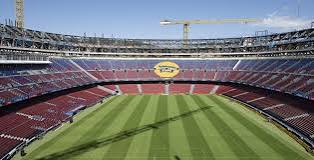
Recent reporting indicates that more than €1.2 billion of the club's debt is directly linked to financing the Spotify Camp Nou project.
That means the stadium is simultaneously one of Barcelona's biggest financial burdens and potentially one of their biggest future revenue generators.
The success of the project could therefore determine whether the club's current financial strategy ultimately looks clever or dangerous.
6. Why does Barcelona still struggle with registration?
This is another issue that opponents of the current board can point towards.
Despite their enormous global commercial appeal and reported revenue growth, Barcelona have repeatedly found themselves operating under La Liga's financial-control restrictions.
For supporters, the obvious question is: how can a club capable of generating more than €1 billion in revenue still find itself scrambling to register players?
The answer lies in the difference between revenue, available cash, debt obligations and La Liga's squad-cost regulations.
7. Has Laporta genuinely improved the club’s finances?
There is evidence for both sides of the argument.
Barcelona's financial situation in 2021 was undeniably severe. Laporta inherited a club that he said had €1.35bn in debt, negative net assets and major short-term financial pressure.
His administration subsequently increased revenue, secured major commercial partnerships and used the club's assets to generate liquidity.
But the club remains heavily indebted.
That means describing the situation as either a complete financial recovery or an outright failure would oversimplify a complicated balance sheet.
8. Are Barcelona simply moving debt around?
This is one of the most politically explosive questions.
The financial levers gave Barcelona immediate resources by monetising future income.
The Camp Nou financing, meanwhile, represents a long-term investment intended to produce additional revenue once the stadium is fully operational.
So the central issue is whether Barcelona's current obligations are backed by assets and future income capable of servicing them.
That is a question ultimately answered by the club's financial statements rather than transfer-window headlines.
9. What happens if the Camp Nou project delivers
This could completely change the conversation.
Barcelona's argument is essentially that the club is investing in infrastructure capable of dramatically increasing future matchday, hospitality, commercial and tourism-related income.
If those projections are achieved, today's debt could look substantially more manageable.
If revenues fall below expectations, however, the pressure becomes considerably greater.
The stadium is therefore not simply a construction project — it is a central part of Barcelona's financial recovery strategy.
10. So, where did the billion go?
The simplest answer is that there was never one mysterious billion-euro pot that disappeared.
Barcelona's finances involve historic debt, stadium financing, operating costs, player investments, commercial revenue, future-income sales and financial restructuring.
Laporta's administration inherited a club with extraordinary financial problems and used the club's assets to create liquidity.
The club has subsequently generated significant revenue and continued investing in the team.
But the criticism remains legitimate: Barcelona still have a huge debt burden, and the success of Laporta's strategy ultimately depends on whether the club's future revenues can justify the financial commitments made today.
That is why the opposition's questions matter.
The real test for Laporta will not be whether Barcelona can keep spending. It will be whether the club can eventually do so without repeatedly needing extraordinary financial measures to make the numbers work.
Fan Debate
⚽ Goal: Has Laporta genuinely improved Barcelona's financial situation?
🔥 Fire: Were the financial levers necessary or too risky?
😲 Shock: Does Barcelona's current debt surprise you?
👍 Like: Will the new Camp Nou transform Barça's finances?
💬 Comment: What is the biggest financial question Barcelona still need to answer?
Comments (0)
No comments yet. Be the first to share your thoughts!