Mourinho's Biggest Netflix Bombshells: The Manchester United Deal, Chelsea Fallout and His Long-Awaited Revenge
SevensSportsArena
5 comments
José Mourinho has spent more than two decades making football feel bigger than it already is.
He has won the Champions League with Porto and Inter Milan, conquered England with Chelsea, lifted trophies in Spain and Italy, and built a reputation as one of the most divisive and fascinating managers of his generation.
But behind the trophies are decisions that could have completely changed football history.
What if Mourinho had actually succeeded Sir Alex Ferguson at Manchester United in 2013? What really happened between the Portuguese manager and Roman Abramovich? And what was going through Mourinho's mind when he walked back into Stamford Bridge as the manager of Inter Milan?
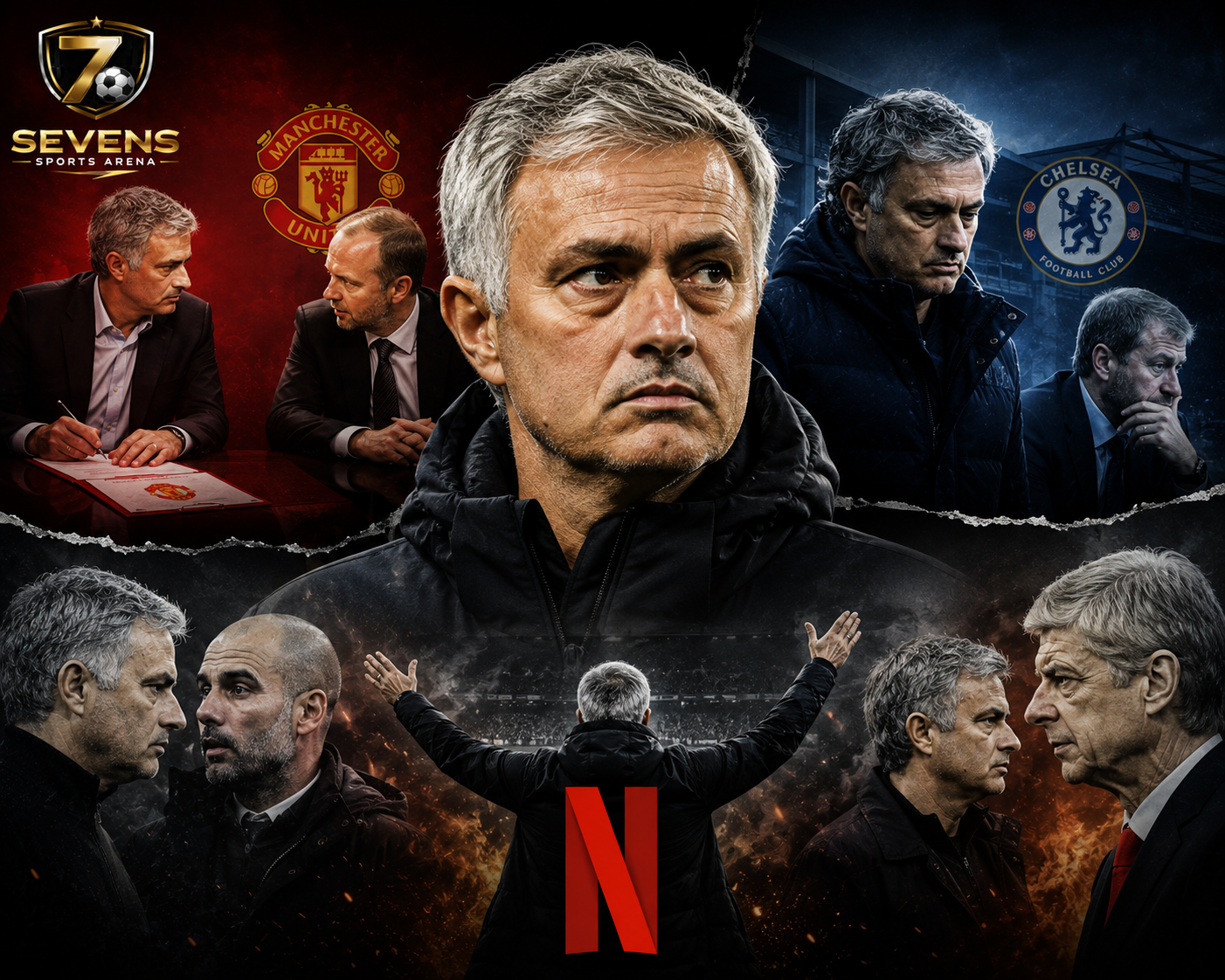
Netflix's new three-part documentary MOURINHO, released globally on 11 August 2026, revisits the extraordinary career of the Portuguese manager with contributions from figures including Ferguson, John Terry, Frank Lampard, Didier Drogba, Iker Casillas, Zlatan Ibrahimović and Samuel Eto'o.
[About Netflix]
Rather than simply celebrating the trophies, the documentary opens the door to some of the decisions and relationships that helped create the Mourinho legend.
And one revelation in particular has left Manchester United supporters wondering how different football history might have been.
The Manchester United Job Mourinho Actually Agreed to Take
For years, the idea of Mourinho replacing Sir Alex Ferguson at Manchester United was one of football's great what-ifs.
Now, Mourinho has confirmed that it was much more than speculation.
In the documentary, Mourinho reveals that after leaving Real Madrid in 2013, he signed an agreement to succeed Ferguson at Manchester United.
That changes the story of Ferguson's succession completely.
Mourinho was not merely a candidate being discussed behind closed doors. According to his account, the deal had actually been agreed before he changed his mind and returned to Chelsea.
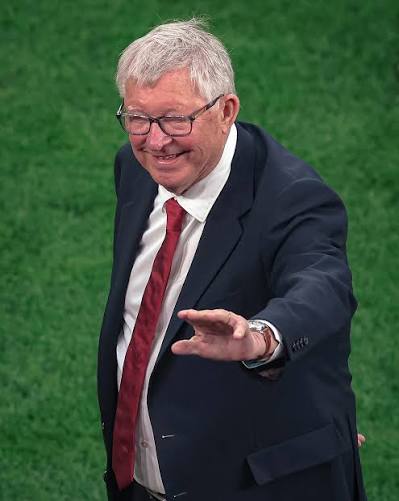
Ferguson appears in the documentary and confirms the extraordinary sequence of events. He recalls believing Mourinho had accepted the job before everything changed within hours. [�The Sun +1]
The reason was Chelsea.
Mourinho had already given his word that he would return to Stamford Bridge, and ultimately decided he could not break that promise.
Ferguson recalls receiving an emotional phone call from Mourinho in which the Portuguese manager explained that he could not take the United job because he had committed himself to Chelsea. Ferguson says he understood the reason, although he was disappointed.[�Reddit]
It is an extraordinary moment because Manchester United eventually appointed David Moyes following Ferguson's retirement.
Mourinho went back to Chelsea.
Three years later, Mourinho finally became Manchester United manager.
The question that will now follow this revelation forever is simple:
What would Manchester United have looked like if Mourinho had taken the job in 2013?
The Decision That Changed Two Clubs
The consequences of Mourinho's decision went far beyond one managerial appointment.
Manchester United entered the post-Ferguson era with Moyes, while Mourinho returned to the club where he had already become a legendary figure.
Mourinho had previously spoken publicly about his desire to return to Chelsea. In 2013, he said he would have chosen Chelsea over any other job and had already known about Ferguson's plans to retire.
At the time, however, the full extent of his discussions with Ferguson was not public.
The Netflix documentary has now added a remarkable missing piece to that story.
And there is an even more fascinating twist.
Mourinho eventually did manage Manchester United. He won the Europa League, League Cup and Community Shield during his time at Old Trafford and finished second in the Premier League in 2017/18.
But had he arrived in 2013, he would have inherited Ferguson's squad immediately after one of the greatest managerial reigns football has ever seen.
Would he have rebuilt the squad differently?
Would United have remained competitive with Manchester City?
Would Chelsea's own history have changed?
Nobody can answer those questions. That uncertainty is exactly what makes the revelation so fascinating.
Then Came the Chelsea Return
Mourinho's decision to reject Manchester United in favour of Chelsea was not simply a career choice.
It was an emotional one.
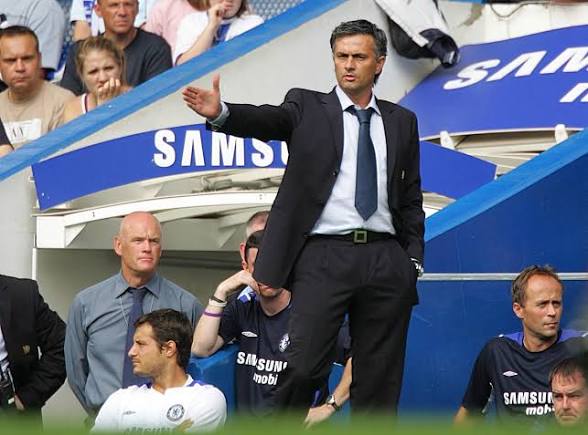
His first Chelsea spell had transformed him into a Premier League icon. He won back-to-back league titles in 2004/05 and 2005/06, while building a team that became synonymous with defensive strength, physicality and ruthless efficiency.
His departure in 2007 ended one of the most successful periods in Chelsea's history.
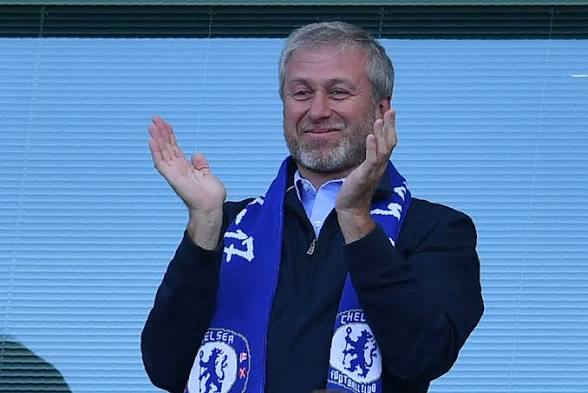
But Mourinho has always insisted that his relationship with Abramovich did not completely collapse.
When he returned in 2013, Mourinho rejected the idea that he had been permanently broken off from the Chelsea owner. He described their previous separation as a mutual decision and said the relationship remained strong enough for them to work together again. [The Guardian]
The second spell, however, would eventually end in familiar fashion.
And that made Mourinho's eventual return to Stamford Bridge with Inter Milan even more intriguing.
The Night Mourinho Returned to Stamford Bridge for Revenge
In March 2010, José Mourinho walked back into Stamford Bridge.
But this time he was not Chelsea's manager.
He was the opposing manager.
Mourinho's Inter Milan had been drawn against Chelsea in the Champions League last 16, and the tie carried an emotional weight that went far beyond football.
Mourinho had left Chelsea following a power struggle with Abramovich in 2007. Three years later, he was standing on the opposite touchline with the opportunity to eliminate his former club from Europe's biggest competition.
The media quickly framed it as Mourinho's revenge.
And after Inter won the tie 3-1 on aggregate, that description became part of football folklore.
The second leg at Stamford Bridge ended 1-0 to Inter, with Samuel Eto'o scoring the decisive goal. Mourinho had returned to his old home and knocked Chelsea out of the Champions League. [�ABC News]
It was not merely a victory.
It was a statement.
Inter would eventually go all the way and win the Champions League that season, completing an extraordinary treble under Mourinho.
Roman Abramovich Was at the Centre of the Story
The Mourinho-Abramovich relationship remains one of the most fascinating manager-owner partnerships in modern football.
Together, they transformed Chelsea.
Abramovich provided the financial backing. Mourinho provided the tactical identity, winning mentality and leadership that turned Chelsea into a dominant force in English football.
But success did not prevent conflict.
Their first partnership ended in 2007, and the eventual fallout became one of the defining moments of Mourinho's Chelsea story.
When Mourinho returned with Inter, the opportunity to eliminate Chelsea carried an obvious emotional dimension.
Contemporary reports described the Champions League tie as a revenge mission against Abramovich, particularly because Mourinho was returning to Stamford Bridge after their previous power struggle. [�Independent +1]
The irony is that Mourinho's greatest revenge was not simply beating Chelsea.
It was what came afterwards.
Inter won the Champions League.
Mourinho had achieved the European prize Abramovich had desperately wanted during his early Chelsea years.
The Champions League Triumph That Made the Chelsea Revenge Even Sweeter
Mourinho's 2010 Inter team remains one of the most tactically fascinating sides in modern European football.
They were not built simply to dominate possession.
They were built to control games, exploit weaknesses and make opponents uncomfortable.
After eliminating Chelsea, Inter defeated CSKA Moscow and Barcelona before facing Bayern Munich in the final.
Mourinho's team won 2-0, with Diego Milito scoring both goals.
The victory completed the treble.
For Mourinho, it was the second Champions League triumph of his career and one of the defining achievements of his managerial life.
And the path to that trophy had taken him directly through Stamford Bridge.
That is why the Chelsea tie remains such an important chapter in his story.
It was personal, tactical and ultimately historic.
Mourinho's 'Special One' Persona Gets Another Look
The documentary also revisits the personality that made Mourinho a global football celebrity.
When he arrived at Chelsea in 2004, he famously introduced himself with an unforgettable declaration that created the "Special One" persona.
From that moment, Mourinho understood something many managers never fully grasped:
Football is played on the pitch, but the battle for perception is fought everywhere.
Press conferences became part of his tactical arsenal.
Rival managers became characters in his stories.
Referees became part of the conversation.
His players became soldiers.
And supporters became part of the Mourinho world.
The documentary explores that mentality through interviews with people who experienced it first-hand. Netflix describes the series as an attempt to go beyond the touchline theatrics and examine the man behind one of football's most recognisable personalities.
The Man Who Admits He Is Not Always Nice
Perhaps one of the most revealing aspects of the documentary is that Mourinho does not suddenly attempt to rewrite his personality completely.
He accepts that he has been aggressive, confrontational and difficult.
That honesty is important because Mourinho's career has never been about trying to make everybody like him.
He wanted his teams to believe in him.
He wanted opponents to worry about him.
And he wanted journalists to talk about him.
That approach created extraordinary loyalty among some players while producing equally extraordinary conflict with others.
The documentary features former stars from different stages of his career, including Drogba, Lampard, Terry, Casillas, Ibrahimović and Eto'o.
Their perspectives help show why Mourinho could inspire such intense loyalty despite his confrontational methods.
The Side of Mourinho That Football Rarely Sees
For all the headlines, trophies and controversies, there is another Mourinho inside the documentary.
One who speaks about his father.
One who reflects on his career.
One who acknowledges the sacrifices involved in spending decades at the highest level of football.
His late father, Félix Mourinho, was himself a football coach, and the documentary reportedly offers some of its rare emotional depth when Mourinho discusses him. [�The Times]
That vulnerability is unusual.
The public Mourinho has always appeared almost impossible to ●penetrate.
●Confident.
●Combative.
●Certain.
But the documentary occasionally allows viewers to see the person underneath that armour.
It may not completely dismantle the Mourinho persona, but it reveals that there is more behind it than the man who walks into press conferences expecting to control the room.
The Eva Carneiro Controversy Gets Another Chapter
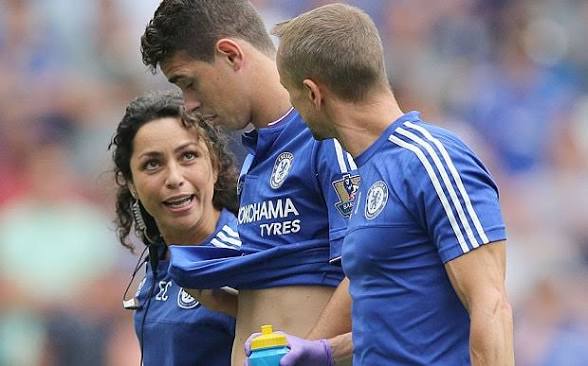
The documentary also revisits the infamous controversy involving Chelsea doctor Eva Carneiro during Mourinho's second spell at Stamford Bridge.
The incident occurred during Chelsea's 2-2 draw with Swansea City in August 2015.
Carneiro and physiotherapist Jon Fearn entered the pitch to treat Eden Hazard late in the match, temporarily leaving Chelsea with fewer players available.
Mourinho criticised the decision and the incident escalated into a major controversy.
Carneiro eventually left Chelsea and later pursued legal action against the club.
In the documentary, Mourinho maintains that the controversy was not responsible for his eventual dismissal later that year. Instead, he points towards Chelsea's poor results and the club's demanding win-or-be-sacked culture under Abramovich.
It is another example of the documentary allowing Mourinho to revisit moments that have followed him throughout his career.
Mourinho's Greatest Weapon Was Never Just Tactics
Perhaps the biggest lesson from the documentary is that Mourinho's greatest strength was never simply his formation or defensive structure.
It was his ability to create a story.
At Porto, the story was the outsider conquering Europe.
At Chelsea, it was the young Portuguese coach challenging the established order.
At Inter, it was the battle against Barcelona and the pursuit of European glory.
At Real Madrid, it was the fight against Barcelona's dominance.
At Manchester United, it was the attempt to restore one of England's biggest clubs to the top.
Mourinho understood that footballers do not only respond to tactics.
They respond to emotion.
They respond to belonging.
They respond to the feeling that they are part of something bigger than themselves.
That ability helped him build some of the most fiercely competitive teams of his generation.
The Mourinho Legacy May Be More Complicated Than the Trophies Suggest
There is an obvious temptation to judge Mourinho entirely by his trophy cabinet.
That would be a mistake.
His legacy is also about how he changed the role of the modern football manager.
He turned press conferences into theatre.
He made tactical preparation part of the public conversation.
He understood media pressure better than almost anyone.
He created rivalries that became global entertainment.
And he proved that a manager could become a celebrity without ever having been a world-class player.
But the documentary also raises a more complicated question.
Can the Mourinho methods that worked so brilliantly in the 2000s and early 2010s remain equally effective in modern football?
That is part of what makes his career so interesting.
He has evolved.
He has changed clubs.
He has changed tactics.
But the core Mourinho personality remains.
The What-If That Could Haunt Manchester United Forever
Ultimately, however, one revelation towers above the rest.
Mourinho was not simply considered for the Manchester United job in 2013.
According to his own account, he signed to take it.
Then he walked away because he had already given his word to Chelsea.
Ferguson confirms the story.
And that leaves Manchester United supporters with one of football's greatest alternate histories.
Mourinho instead of Moyes.
Mourinho rebuilding Ferguson's squad.
Mourinho competing with Manchester City from the beginning of the post-Ferguson era.
Mourinho potentially signing different players.
Mourinho perhaps changing the entire direction of the club.
Of course, none of that can be proven.
Maybe Mourinho would have struggled under the weight of succeeding Ferguson.
Maybe the squad required a rebuild that no manager could have completed quickly.
Maybe Manchester United's structural problems would eventually have caught up with him anyway.
But football history is built on moments that never happened.
And Mourinho's revelation has just given Manchester United fans one of the biggest "what if?" questions imaginable.
Final Thoughts: Mourinho Has Given Football Another Story to Argue About
José Mourinho has always understood the power of a story.
More than a decade after leaving Real Madrid, returning to Chelsea and eventually becoming Manchester United manager, he has revealed a detail that changes the way one of the most important managerial transitions in Premier League history is remembered.
He could have replaced Sir Alex Ferguson.
He had agreed to do it.
He changed his mind.
He returned to Chelsea instead.
Then, years later, he finally took charge at Old Trafford.
And somewhere along the way, he returned to Stamford Bridge with Inter Milan and knocked Chelsea out of Europe on the road to a historic treble.
That is Mourinho's career in miniature: ambition, loyalty, conflict, revenge, trophies and an endless supply of stories.
Netflix's MOURINHO may not answer every question about the man behind the legend, but it has certainly provided football fans with enough new material to debate for years.
And perhaps that is the most Mourinho thing of all.
Even after all these years, he has found another way to make football talk about José Mourinho.
📊 Fan Debate
●⚽ Goal: Would Mourinho have been the right manager to succeed Sir Alex Ferguson in 2013?
●🔥 Fire: Was eliminating Chelsea with Inter Mourinho's sweetest revenge?
●😲 Shock: Were you surprised to learn that Mourinho had actually agreed to join Manchester United?
●👍 Like: If José Mourinho remains one of football's most fascinating managers.
●💬 Comment: If Mourinho had taken the Manchester United job in 2013, do you think the club's history would have been completely different?