
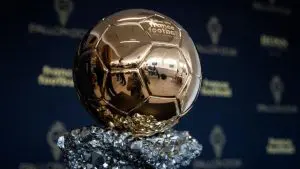
Ballon d'Or Organisers Clarify World Cup Impact as Official Statement Ends Debate Over 2026 Award Race
The organisers of the Ballon d'Or have moved to address one of football's biggest debates following the conclusion of the 2026 FIFA World Cup.
With speculation intensifying over whether Spain's World Cup triumph automatically gives its stars the upper hand in the race for football's most prestigious individual honour, France Football has issued a clear message: winning the World Cup helps—but it does not guarantee the Ballon d'Or.
The statement is expected to shape discussions ahead of the 2026 ceremony, reminding fans and voters that performances across the entire season, rather than a single tournament, remain the foundation of the award.
Official Ballon d'Or Position
In an article published on the official Ballon d'Or platform, France Football analysed previous World Cup years and reached a decisive conclusion.
""Yes, winning the World Cup helps, but it does not guarantee a Ballon d'Or. To win it, you need to have been the best player of the season, not only of the World Cup.""
The statement comes as debates continue over players such as Rodri, Lamine Yamal, Kylian Mbappé, Harry Kane and others who have impressed either throughout the club season, at the World Cup, or both.
History Shows the World Cup Isn't Everything
France Football backed up its position with historical analysis.
While legends such as Bobby Charlton (1966), Paolo Rossi (1982), Lothar Matthäus (1990), Zinedine Zidane (1998), Ronaldo (2002), Fabio Cannavaro (2006) and Lionel Messi (2023) all completed the World Cup–Ballon d'Or double, several winners have lifted football's biggest individual prize without winning the World Cup.
The organisers highlighted examples including:
- Lionel Messi (2010) – won the Ballon d'Or despite Spain winning the World Cup.
- Cristiano Ronaldo (2014) – claimed the award after Germany became world champions.
- Luka Modrić (2018) – won after finishing as a World Cup runner-up with Croatia.
Their analysis found that since the award expanded globally in 1995, only 57% of Ballon d'Or winners in World Cup cycles have also been world champions.
The 2026 Race Remains Wide Open
Comments (0)
No comments yet. Be the first to share your thoughts!