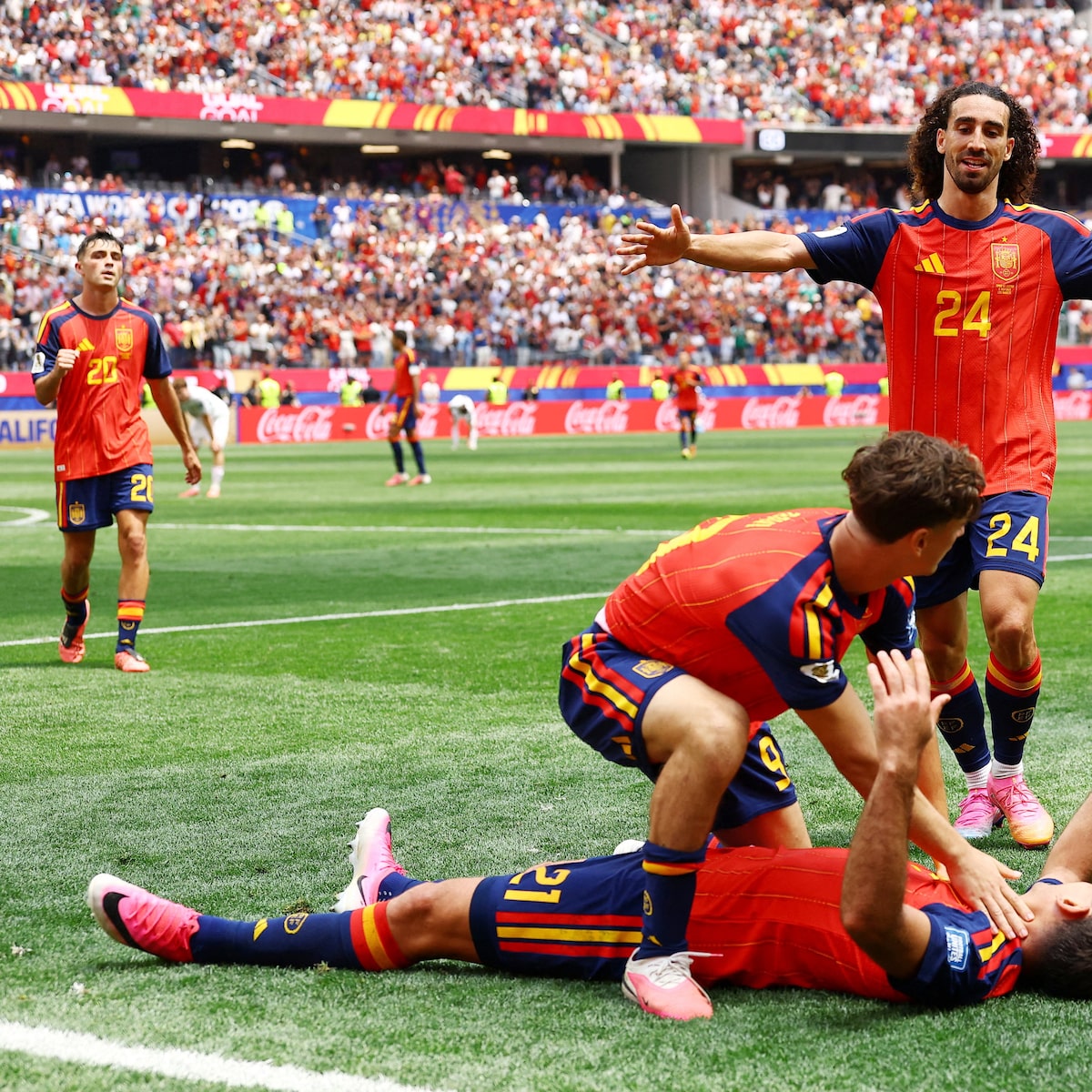
Spain’s recent dominance on the international stage has not just been built on flair and fluid attacking football—it is increasingly defined by a suffocating defensive system rooted in intelligent pressing and relentless possession.
Blending traditional tiki-taka principles with modern high-intensity pressing, Spain have evolved into one of the most tactically complete sides in world football. Their ability to control matches without the ball has become just as important as their elegance in possession—if not more.
For over a decade, Spain have been synonymous with possession football. From their golden era between 2008 and 2012, where they won back-to-back European Championships and the World Cup, their philosophy centred on controlling games through passing dominance.
However, modern football has demanded adaptation. Opponents became more aggressive, more compact, and more willing to disrupt Spain’s rhythm.
Rather than abandoning their identity, Spain refined it.
Today’s version of the team combines:
High pressing triggers immediately after losing the ball
Compact defensive lines that squeeze space
Midfielders who double as defensive disruptors
Forwards who initiate defensive pressure
This shift has turned Spain into a team that doesn’t just keep the ball—they hunt it relentlessly.
Spain’s pressing system is not chaotic—it is calculated and structured.
When possession is lost, the nearest players immediately close down passing lanes rather than simply chasing the ball. This creates a trap, forcing opponents into rushed decisions.
The defensive shape quickly compresses the pitch:
Full-backs step forward to support midfield pressure
Central midfielders block passing lanes centrally
Wingers tuck in to deny easy outlets
The defensive line pushes high to keep the team compact
This coordinated movement suffocates opponents, often forcing turnovers in dangerous areas.
The result? Spain regain possession quickly and maintain territorial dominance.
Spain’s greatest defensive weapon remains the ball itself.
By controlling possession for long periods, they reduce the number of defensive situations they face. Opponents are forced to chase, expend energy, and lose structure.
This approach achieves two key objectives:
Limits opposition attacking opportunities
Creates fatigue that Spain can exploit late in games
In essence, Spain defend before they even need to.
1. Compactness
Spain operate with minimal vertical distance between defence, midfield, and attack. This denies opponents space between the lines.
2. Intelligent Midfielders
Their midfield is built on players who understand positioning and timing. They intercept passes, anticipate movement, and dictate tempo.
3. Coordinated Pressing
Unlike teams that rely on individual pressing efforts, Spain press as a unit. Every player understands their role in the system.
4. Ball Recovery Speed
Spain often win the ball back within seconds of losing it—an essential trait in modern elite football.
Modern football rewards teams that can transition quickly between attack and defence. Spain excel in this area.
Their pressing ensures that:
Opponents rarely build sustained attacks
Counter-attacks are stopped early
Defensive pressure turns into attacking opportunities
This creates a cycle where Spain remain constantly on the front foot—even when defending.
While the legendary Spain sides of the past focused heavily on possession, they were sometimes criticised for lacking verticality and defensive aggression.
The current approach addresses those concerns:
More direct when needed
More aggressive without the ball
More adaptable tactically
This evolution makes Spain more resilient against a wider range of opponents.
Spain’s approach reflects a broader shift in elite football.
Top teams are no longer defined solely by attacking brilliance. Instead, success depends on:
Defensive organisation
Pressing intensity
Tactical discipline
Spain’s model demonstrates how possession football can coexist with defensive aggression, setting a blueprint for future teams.
focus will be on:
Maintaining intensity over long tournaments
Rotating players without losing structure
Adapting against teams that sit deep
Their ability to evolve further will determine whether this tactical model leads to sustained international success.
Spain’s transformation from a possession-heavy side into a tactically balanced powerhouse highlights the evolution of modern football.
By combining intelligent pressing with controlled possession, they have created a system that is both defensively suffocating and offensively precise.
This approach not only strengthens their chances in major competitions but also sets a new standard for how elite teams can dominate games on and off the ball—an enduring impact that will influence football tactics for years to come.
How do you see Spain’s new style?
⚽ GOAL – This system makes Spain unstoppable
🔥 FIRE – Best tactical team in the world right now
😲 SHOCK – I miss the old tiki-taka style
👍 LIKE – Balanced approach is perfect
💬 COMMENT – Can this win the next major tournament?