‘I Do Not Go Offside’ — Haaland’s Tiny Manchester Derby Margin Was Only Half the Story
SevensSportsArena
2 comments
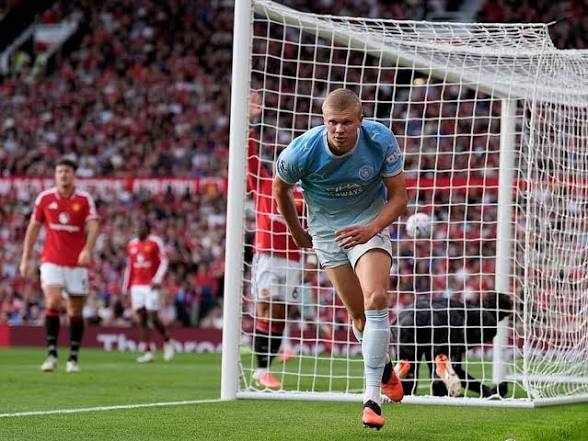
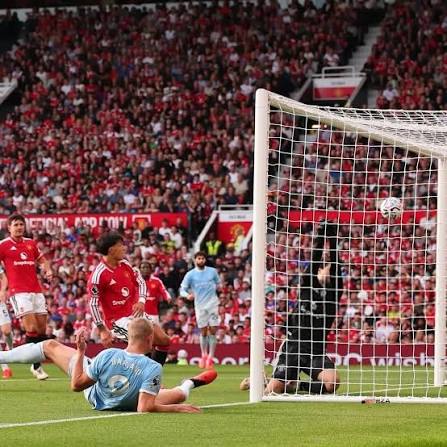
Erling Haaland's Manchester derby winner has become one of those goals that looks increasingly complicated the more closely it is examined.
At first, Manchester United thought they had escaped.
Haaland had put the ball in the net at Old Trafford, only for the assistant referee to raise the flag for offside. A lengthy VAR check followed, and the decision was overturned after technology established that the Manchester City striker himself had been in an onside position.
Haaland later offered a revealing response.
“I do not go offside.”
It was a confident assessment from a striker who has made the timing of his movement one of the defining features of his game.
But the strange part of Sunday's Manchester derby is that Haaland was not actually the player who ultimately created the VAR problem.
Haaland Had Already Won His Personal Battle With the Offside Line
The crucial detail was Patrick Dorgu.
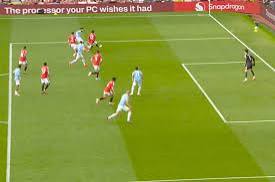
When Josko Gvardiol's deflected cross reached Haaland, the Manchester City forward initially appeared to have moved beyond the last defender.
The subsequent VAR check showed otherwise.
Dorgu's positioning meant Haaland was onside, turning the original decision against him into a mistake.
That is where Haaland's movement deserves closer attention.
The Norwegian did not simply sprint beyond the defence and hope the officials missed it. He remained close enough to the defensive line for the smallest positional difference to matter.
It is exactly the kind of movement that can make him so difficult for defenders to manage.
A striker can be incredibly quick and still repeatedly find himself offside if his timing is poor.
Haaland's value comes from combining that speed with patience.
Against United, his timing gave him the legal position he needed.
Then Another City Player Changed the Entire Conversation
The biggest twist came from Enzo Fernández.
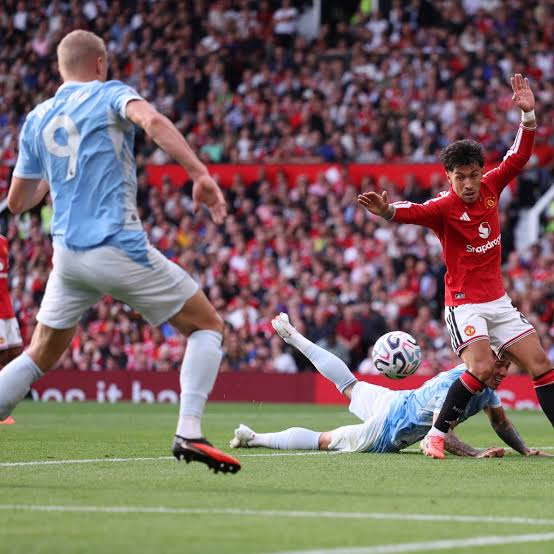
While Haaland was ultimately shown to be onside, Fernández was in an offside position during the attacking sequence and attempted to play the ball.
That meant the question was no longer simply:
“Was Haaland offside?”
The more complicated question was whether Fernández's position and movement had interfered with the play.
That distinction is what VAR failed to properly resolve.
Pro Ref later admitted that the decision to allow the goal was an “error of judgement”, explaining that VAR should have recommended an on-field review. Refereeing chief Howard Webb subsequently described the problem as “tunnel vision”, with the officials concentrating on Haaland's position without fully considering Fernández's involvement.
So Haaland's famous offside line was not actually the final issue.
He had beaten it.
The controversy moved to the player behind him.
Why Haaland's Comment Suddenly Looks More Interesting
That is what makes Haaland's post-match comment particularly intriguing.
When he said he does not go offside, he was talking about his own movement — and on this occasion, the technology backed him up.
But the goal became controversial because being onside yourself is not necessarily enough.
Football's offside law can also punish an attacking player who interferes with an opponent while in an offside position.
That is precisely where the Manchester derby became difficult.
Haaland could legitimately point towards his own positioning.
United could point towards Fernández.
And VAR had to consider both.
It ultimately focused too narrowly on the first question.
The Lesson From Haaland's Movement
For years, Haaland's extraordinary finishing and physical presence have dominated discussions about his game.
His movement is easier to overlook because it often happens before the spectacular part.
Yet the Manchester derby offered a perfect example.
The striker had to judge the position of the defenders, the timing of the cross and the moment at which he could attack the ball without moving beyond the defensive line.
That calculation happened in a fraction of a second.
Dorgu's position ultimately kept him onside.
Haaland then reacted quickly enough to finish.
It was the sort of movement he has repeatedly used throughout his career: stay close to the defensive line, delay the decisive movement and attack the space once the opportunity opens.
Against a high defensive line, that can be devastating.
Against a deep defence, it becomes a different challenge — finding enough room without giving defenders the chance to crowd him out.
Manchester United's Frustration Was About Something Else
The irony for United is that their biggest complaint was not ultimately about Haaland.
It was about what happened around him.
Lisandro Martínez was involved in the defensive situation around Fernández, and the argument from the United side was that the offside player's presence affected the way the defender could react.
That is why the incident remained controversial even after the technology demonstrated that Haaland was onside.
The initial question had apparently been answered.
But the second question had not been properly addressed.
Pro Ref's subsequent admission effectively confirmed that distinction.
The refereeing body contacted Manchester United to acknowledge the error, while the VAR officials involved were stood down from the following round of Premier League appointments.
Haaland's Derby Goal Now Tells Two Stories
There are therefore two separate stories inside the same Manchester derby goal.
The first is about Haaland.
His movement was precise enough to survive the offside check, and his instinct to attack the cross at the right moment helped City find the breakthrough despite playing with 10 men.
The second is about VAR.
The technology correctly established that Haaland was onside but failed to properly complete the wider assessment of the attacking move.
That is why the goal can simultaneously demonstrate Haaland's remarkable positional awareness and still be officially recognised as an error by the refereeing authorities.
The most memorable part of Haaland's performance may have been the finish.
But the most revealing part could have happened before he even touched the ball.
I am making a good salary from home $4580-$5240/week , which is amazing under a year ago I was jobless in a horrible economy. I thank God every day I was blessed with these instructions and now its my duty to pay it forward and share it with Everyone,
Here is I started_______ NetPay1.Com