Premier League Confirms Three Refereeing Errors as First KMI Report Exposes VAR Debate
SevensSportsArena
0 comments
The Premier League has officially confirmed three incorrect on-field refereeing decisions from the opening round of the 2026/27 season, providing supporters with an unprecedented level of detail about how controversial incidents are assessed.
The findings come from the Premier League's newly public Key Match Incidents (KMI) Panel, which has begun publishing its weekly verdicts on major refereeing and VAR decisions.
Across Match Round 1, the panel reviewed 21 referee key-match incidents and judged 90 per cent of the original on-field decisions to be correct.
That means three decisions were deemed incorrect.
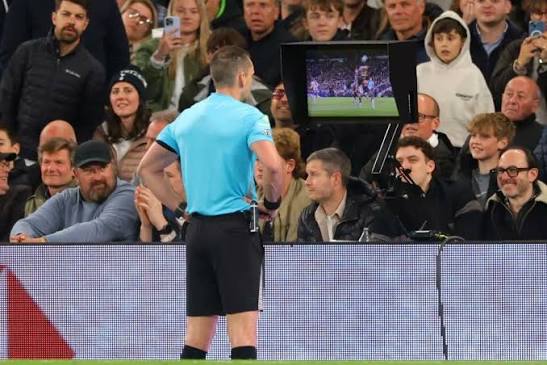
But the findings also reveal something more complicated: a referee can be judged to have made the wrong call without VAR necessarily being considered wrong for not intervening.
That distinction is at the heart of the Premier League's new transparency system.
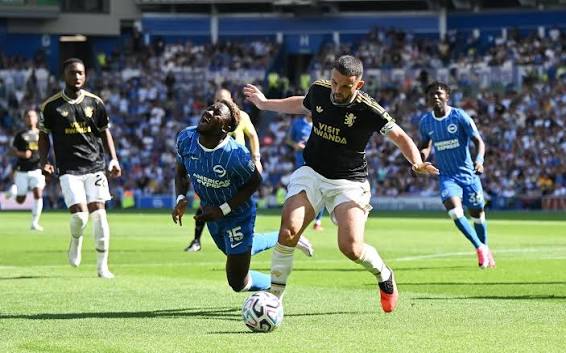
McGinn challenge should have resulted in a penalty
One of the confirmed errors came during Brighton & Hove Albion's meeting with Aston Villa.
With the match underway, Aston Villa's John McGinn challenged Brighton's Osman and no penalty was awarded.
The KMI Panel disagreed with the original decision.
The five-member panel voted 4-1 that the on-field decision was incorrect and that a penalty should have been awarded.
The panel's assessment was that McGinn stepped into the challenge and made contact with Osman without playing the ball.
However, the incident did not lead to a VAR intervention.
Interestingly, the panel did not conclude that VAR had made an error by staying out of the decision.
The vote on whether VAR should have intervened finished 3-2 in favour of the decision not to intervene, meaning the majority believed the incident did not meet the Premier League's high threshold for a clear and obvious error.
That creates an unusual situation: the referee got the decision wrong, but VAR was still judged to have been correct not to overturn it.
Gomes should have been sent off
The second confirmed error was also recorded in the Brighton-Villa match.
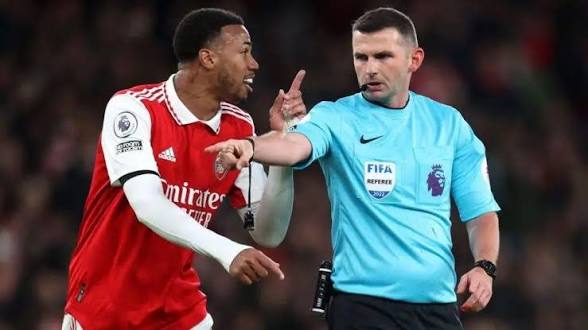
Gomes was not initially sent off for violent conduct.
The KMI Panel was unanimous in determining that the decision was incorrect.
All five members voted against the original decision, meaning the verdict was 0-5.
This time, however, VAR did intervene and recommended that the referee review the incident.
The panel unanimously agreed that the VAR intervention was correct, voting 5-0.
The outcome therefore demonstrates the system working as intended: an incorrect on-field decision was identified, VAR intervened after assessing the incident against the required threshold, and the eventual decision was considered correct.
Gvardiol offside call also overturned
The third error came from Manchester City's match against Bournemouth.
Josko Gvardiol had a goal ruled out for offside.
The KMI Panel subsequently judged that original decision to be incorrect.
VAR had intervened during the match and recommended that the goal be awarded.
The panel unanimously supported that intervention, with a 5-0 vote confirming that VAR had correctly overturned the original decision.
Unlike the McGinn incident, there was therefore no disagreement over whether VAR had reached the appropriate threshold for intervention.
The goal should have stood.
Three errors, but not three VAR failures
The headline figure could easily be interpreted as three refereeing mistakes that VAR failed to correct.
That would not be accurate.
The KMI findings make an important distinction between the accuracy of the referee's original decision and whether VAR should have intervened.
Across the opening round, the panel judged 90 per cent of on-field decisions to be correct.
Meanwhile, the two decisions that actually went through VAR review were both judged to have resulted in correct final outcomes.
The McGinn incident is the clearest example of why those numbers need to be separated.
The majority of the panel believed the referee should have awarded a penalty.
But the same panel also decided, by a 3-2 vote, that VAR's decision not to intervene did not constitute a clear and obvious error.
It is a distinction that will inevitably frustrate some supporters because it effectively means a decision can be wrong without being wrong enough for VAR to change it.
That remains one of the fundamental features of the Premier League's VAR framework.
Why the findings matter
The publication of these verdicts represents a significant change in how Premier League refereeing is scrutinised.
The KMI Panel has existed since the 2022/23 season, but its detailed assessments were previously not routinely made public.
From this season, the Premier League is publishing the findings weekly as part of a wider transparency drive.
The five-member panel consists of three former players or coaches, alongside representatives from the Premier League and Pro Ref.
Each incident is initially assessed to determine whether the referee's decision was correct or incorrect.
If the panel decides the original call was wrong, it then considers whether the error reached the threshold required for VAR intervention.
That process is designed to provide more context than simply labelling a decision as a mistake.
It also gives supporters an opportunity to see how the officials' decisions are assessed after the final whistle.
Premier League's new transparency test has begun
The opening KMI report has therefore delivered exactly the kind of information supporters have wanted for years.
Three original decisions were officially judged to be incorrect.
Two of those incidents — Gomes' red-card decision and Gvardiol's disallowed goal — were correctly addressed by VAR.
The McGinn penalty decision is different. The referee was judged to have made the wrong call, but VAR was not considered to have made an error by leaving the decision untouched.
That distinction is likely to become one of the biggest talking points of the new system.
Because the real question surrounding VAR is no longer simply "Was the referee wrong?"
It is also:
"Was the mistake serious enough for VAR to intervene?"
The Premier League has now started publishing the answers.
And with controversial decisions guaranteed to continue throughout the season, the weekly KMI reports could become one of the most closely watched parts of the competition.
Fan Debate
⚽ GOAL: The Premier League is right to publish the KMI verdicts and give fans more transparency.
🔥 FIRE: VAR should have intervened on the McGinn penalty decision.
😮 SHOCK: Three incorrect referee decisions were already identified from the opening round.
❤️ LIKE: Publishing the panel's reasoning is a major improvement for Premier League transparency.
💬 COMMENT: Should VAR be allowed to intervene whenever the KMI Panel later decides that the referee's original decision was wrong?
Comments (0)
No comments yet. Be the first to share your thoughts!