Premier League Fans Face Major Rule Changes in 2026/27 — Here’s What Will Be Different
SevensSportsArena
0 comments
The new Premier League season is bringing more than new managers, transfers and promoted clubs.
Several important changes to the Laws of the Game and refereeing approach will be introduced in the 2026/27 campaign, with the Premier League placing particular emphasis on reducing time-wasting, improving the flow of matches and dealing more firmly with certain forms of misconduct. [Premier League +1]
Some of the changes could have an immediate impact on what fans see during matches.
Here are the biggest ones.
The five-second rule could punish time-wasting
One of the most noticeable changes concerns throw-ins and goal-kicks.
When officials determine that a player is clearly delaying a restart unfairly, a five-second countdown can be used.
If the limit is exceeded, the opposition can be awarded the throw-in.
For goal-kicks, the consequence is even more significant: the opposition can be awarded a corner. [Premier League]
The change is designed to stop players from deliberately taking too long to restart play.
That means the familiar routine of slowly walking towards the ball, moving it into position and taking several extra seconds could become much riskier.
Injured players face a longer spell off the pitch
Players who receive on-field injury treatment or assessment will now generally have to leave the pitch for at least one minute before returning.
That increases the previous Premier League period of 30 seconds.
[Premier League]
The objective is to discourage unnecessary stoppages while still allowing genuine injuries to receive appropriate medical attention.
It could also change how managers deal with players who go down during matches.
Substituted players have 10 seconds to leave
Another change targets substitutions.
Once a substitution has been signalled, the player being replaced will have 10 seconds to leave the field.
If they take longer than permitted, their replacement cannot enter until the first stoppage after one minute has elapsed, subject to the relevant exceptions.
[Premier League]
In other words, deliberately taking a long route off the pitch could actually leave a team temporarily playing with fewer players.
That could make late-game time-wasting through substitutions considerably more difficult.
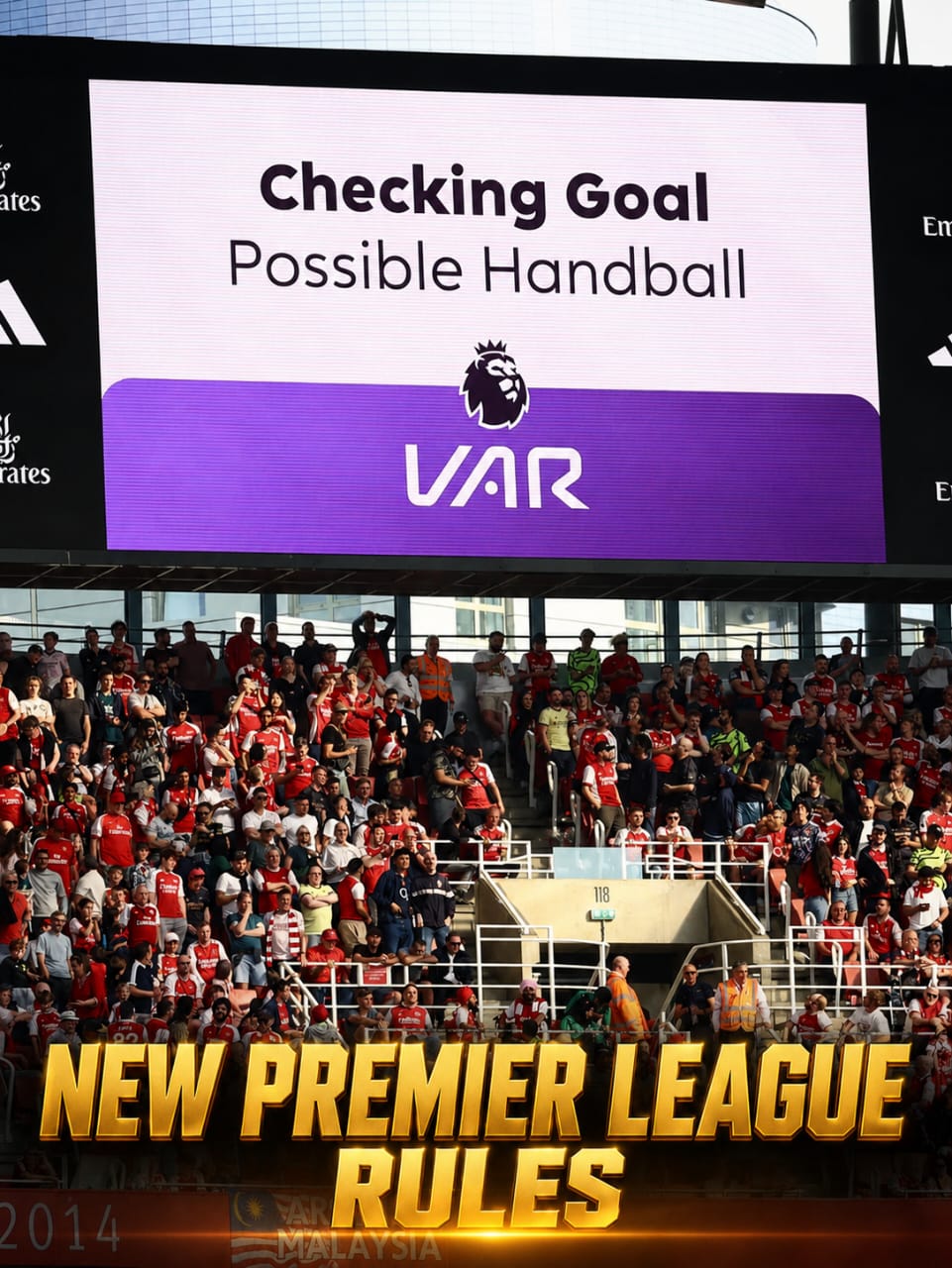
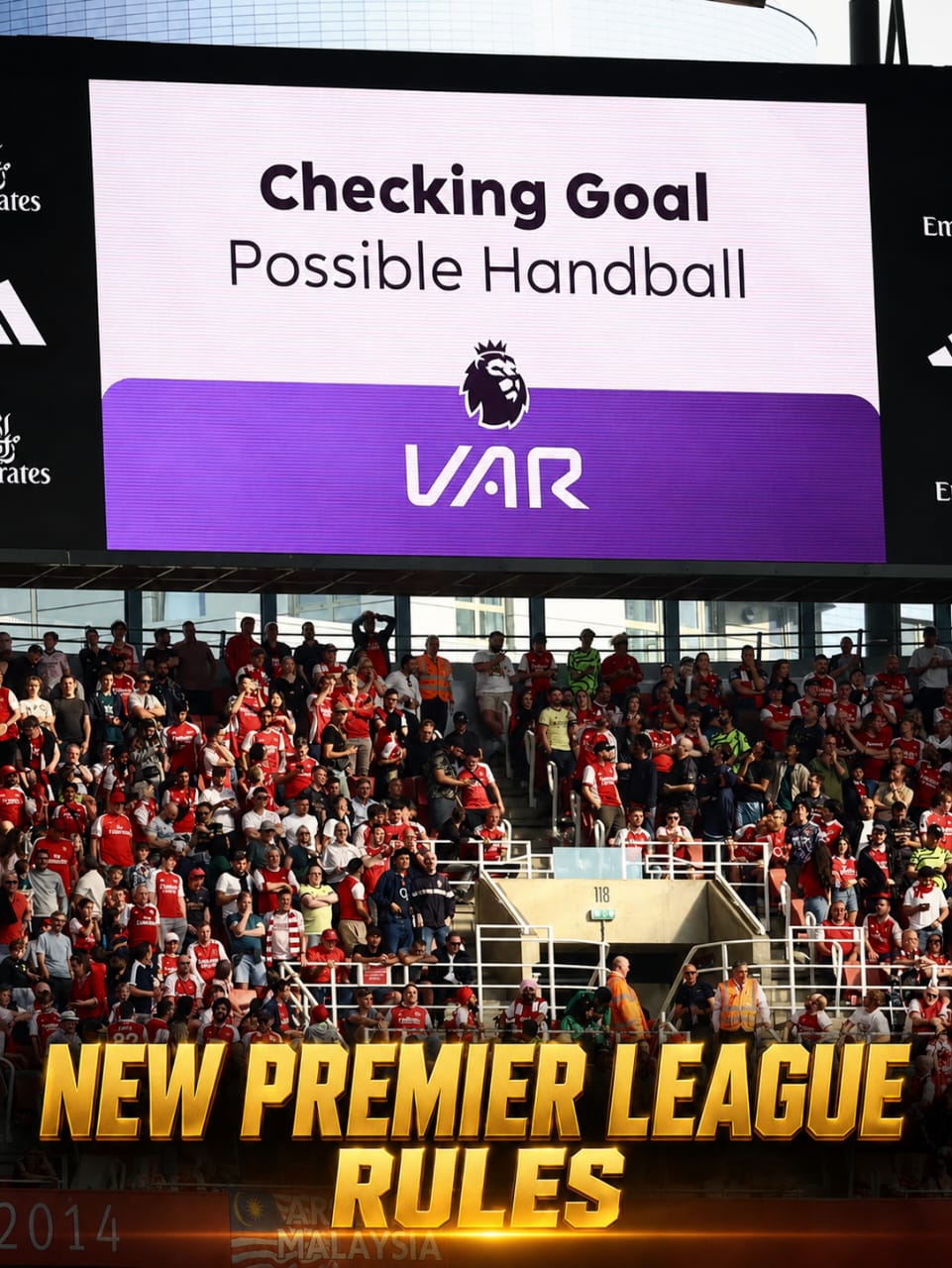
VAR can now review a second yellow leading to a red
There is also an important change involving VAR.
A second yellow card that results in a player's dismissal can now be reviewed by VAR.
The important distinction is that this applies when the referee has actually awarded the second yellow. VAR cannot simply intervene because it believes a player should have received a second yellow in the first place.
[Premier League]
The change could provide another safeguard against a potentially incorrect sending-off.
Goalkeeper injury stoppages are getting a major rethink
One of the most unusual changes is being introduced as a trial.
If play is stopped because of a goalkeeper injury, one outfield player from that team must leave the pitch for at least one minute after play restarts.
[Premier League]
There are exceptions, including certain genuine injury situations involving contact with an opponent or cases where the goalkeeper is bleeding.
[Premier League]
The idea is to prevent goalkeeper injury stoppages from being used as an opportunity to slow the match down or allow a team to receive tactical instructions.
The trial will be monitored throughout the season.
Referees will take a tougher look at holding
The Premier League is also asking referees to pay closer attention to holding offences.
Officials will be encouraged to penalise defenders when they are clearly focused on stopping an opponent rather than playing the ball and the holding materially affects the attacker's ability to play or challenge for it.
[Premier League]
That could have particular consequences at set pieces, where holding and grappling have become increasingly common.
Hair-pulling now has clearer sanctions
There is also new guidance on hair-pulling.
A deliberate action involving excessive force or brutality can result in a red card.
Where the action does not involve excessive force or brutality, the sanction will be a yellow card.
[Premier League]
The Premier League says the clarification is intended to make the punishment more proportionate and consistent.
Simulation will remain under the microscope
Players attempting to deceive officials through simulation or exaggeration will continue to face a robust approach from referees.
The Premier League has specifically identified simulation and embellishment as areas officials should continue to address.
[Premier League]
That means players who deliberately attempt to influence refereeing decisions could find themselves punished rather than rewarded.
The bigger picture: Premier League wants more football
Although the individual changes may appear unrelated, they share a common objective.
The Premier League wants to reduce unnecessary delays and increase the amount of meaningful football being played.
The competition has therefore placed stronger measures against time-wasting alongside changes designed to make VAR more efficient and reduce unnecessary disruption.
[Premier League]
For supporters, the biggest difference may not come from one dramatic rule.
Instead, it could be the accumulation of smaller changes — quicker restarts, faster substitutions, fewer tactical injury stoppages and stronger action against players attempting to waste time.
And with the 2026/27 Premier League season beginning on 21 August 2026, fans will not have to wait long to see how the new approach works in competitive matches.
Fan Debate
●⚽ Goal: Which new Premier League rule will have the biggest impact?
●🔥 Fire: Will the five-second rule finally eliminate unnecessary time-wasting?
●😲 Shock: Is the goalkeeper injury trial too harsh or a smart solution?
●👍 Like: Do you support VAR being able to review second-yellow-card dismissals?
●💬 Comment: Which Premier League rule would you change if you could?
Comments (0)
No comments yet. Be the first to share your thoughts!