
Premier League
Explained: Why Maguire’s Handball Couldn’t Stop Manchester United’s Controversial Goal
SevensSportsArena
0 comments
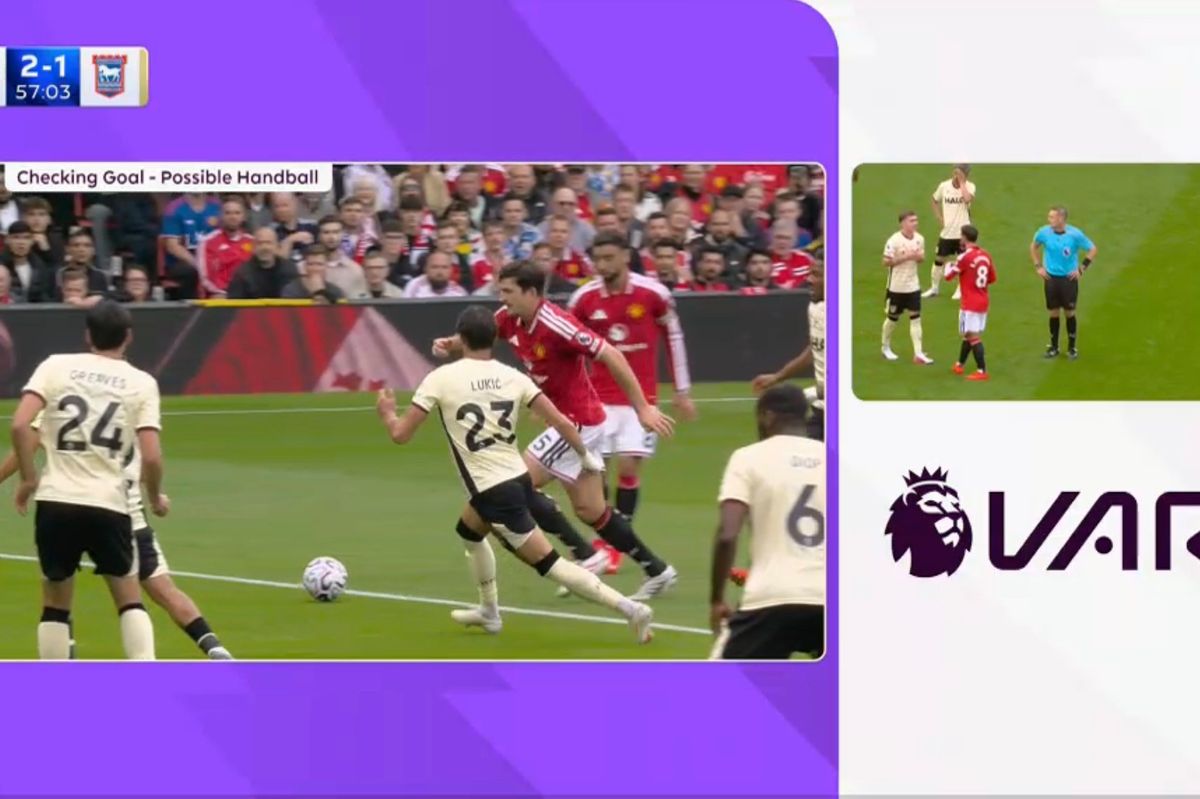
Manchester United’s 5-2 victory over Ipswich Town was briefly overshadowed by one of the most confusing moments of the afternoon, as Harry Maguire appeared to handle the ball before the hosts took the lead.
The incident immediately triggered a VAR review, with Ipswich players protesting that the goal should have been ruled out.
But after checking the footage, VAR confirmed the goal.
Here is why.
What happened?
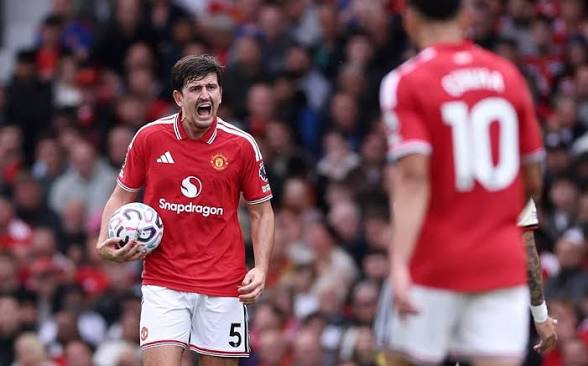
With the score level at 1-1, Maguire was involved in the build-up to Manchester United’s second goal.
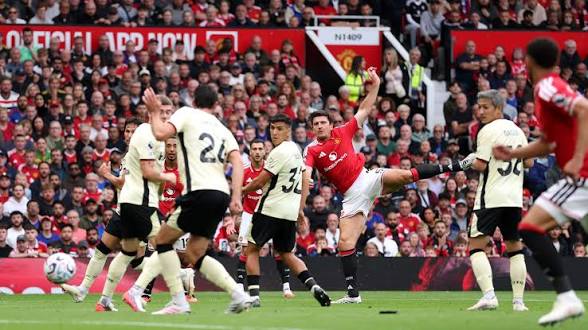
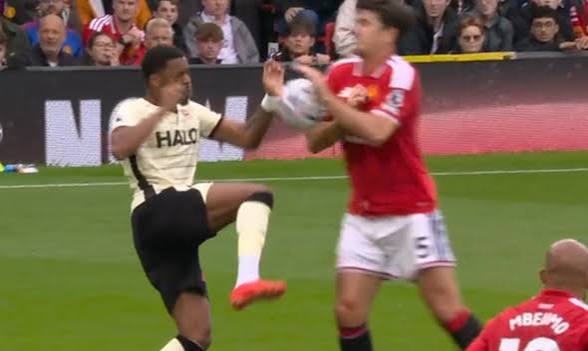
The ball struck his hand as he attempted to gain control, before the defender advanced and fired a shot towards goal.
The effort, however, was not heading into the net.
Instead, it deflected off Ipswich defender Jacob Greaves and ended up in the back of the net.
The goal was therefore officially recorded as a Greaves own goal, rather than a Maguire goal
Why didn't VAR disallow it?
This is where the handball law becomes important.
Under the current rules, an accidental handball by an attacking player is not automatically punishable simply because a goal follows.
There is a specific offence when a player scores directly from a handball or immediately after the ball touches their hand or arm.
But there are mitigating circumstances when the player who handled the ball does not become the immediate goalscorer.
In Maguire's case, his shot was not going into the goal and was subsequently deflected into the net by Greaves.
That meant the goal was classified as an own goal rather than Maguire directly scoring after handling the ball.
Premier League explains the decision
The Premier League Match Centre subsequently explained the decision.
Officials determined that Maguire was not the immediate goalscorer following what they considered an accidental handball.
VAR's recommendation was effectively that the handball was not punishable because the goal resulted from the defender's own goal.
In other words, the fact that Maguire's hand was involved did not automatically invalidate the eventual goal.
What if Maguire's shot had gone straight in?
This is the crucial distinction.
Had Maguire's effort gone directly into the net immediately after the accidental handball, the goal would have been disallowed.
The fact that his shot was going off target and required a deflection from Greaves changed the application of the law.
That is why the seemingly obvious handball did not result in the goal being cancelled.
Why fans are still furious
Although the decision was consistent with the current interpretation of the law, it has understandably generated plenty of debate.
From Ipswich's perspective, Maguire's hand helped him gain control of the ball immediately before he took the shot.
Without that contact, he may not have been able to get into the position to attempt the strike.
That has led to questions about whether the wording of the law creates an unfair distinction between an accidental handball that directly produces a goal and one that contributes to an own goal moments later.
Former players and pundits have also questioned whether the rule needs further examination.
The decision proved costly for Ipswich
The controversial goal put United 2-1 ahead and completely changed the momentum at Old Trafford.
Bruno Fernandes then converted a penalty before completing his hat-trick, while Bryan Mbeumo added another to put the game beyond Ipswich.
Chuba Akpom scored a late consolation, but United ultimately secured a 5-2 victory.
So while the handball controversy will dominate much of the post-match discussion, the official explanation is straightforward.
Maguire's handball was accidental, he was not the immediate goalscorer, his shot was going off target, and Greaves ultimately turned it into an own goal. Under the current rules, VAR therefore had no grounds to overturn it.
Comments (0)
No comments yet. Be the first to share your thoughts!