
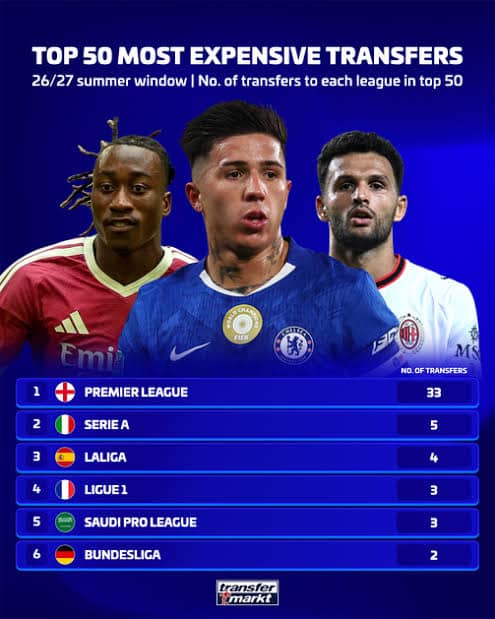
The Premier League's 2026 summer transfer window did not merely break spending records. It offered a fascinating reminder that £100 million does not mean the same thing to every club.
English top-flight clubs spent approximately £3.46 billion during the window, setting a new summer spending record for the second consecutive year. Manchester City, Chelsea and Tottenham were among the biggest spenders, while promoted clubs such as Ipswich Town, Hull City and Coventry City also invested heavily.
But headline transfer fees only tell part of the story.
A £50 million signing might be manageable for one Premier League giant but represent a far greater financial gamble for a smaller club. That is the thinking behind ESPN's "true cost" ranking, which measures each transfer fee against the buying club's estimated revenue.
The result is a ranking that looks very different from a conventional list of the biggest fees.
What Does "True Cost" Mean?
The ranking measures the reported transfer fee as a percentage of the buying club's revenue.
The figures are estimates because the latest complete Premier League revenue figures available are from the 2024-25 financial year. Revenue estimates were also required for clubs that were not in the Premier League during that season.
That means a relatively modest £20m-£30m transfer can rank above a £70m deal if it consumes a significantly larger share of the buying club's resources.
In other words, the question is not simply:
"Who cost the most?"
It is:
"Who cost their new club the most relative to what that club can afford?"
And that produces some fascinating results.
The Top 10
| Rank | Player | From → To | Transfer Fee | Revenue Share |
|---|---|---|---|---|
| 1 | Morgan Rogers | Aston Villa → Chelsea | €138m | 24.10% |
| 2 | Mamadou Sangare | Lens → Brentford | €48m | 23.52% |
| 3 | Luka Vuskovic | Tottenham → Brighton | €54m | 20.86% |
| 4 | James Trafford | Man City → Leeds | €46.7m | 20.76% |
| 5 | Liam Delap | Chelsea → Nottingham Forest | €52.5m | 20.56% |
| 6 | El Hadji Malick Diouf | West Ham → Brentford | €40.8m | 19.99% |
| 7 | Julio Enciso | Strasbourg → Ipswich | €30.5m | 19.06% |
| 8 | Enzo Fernández | Chelsea → Man City | €145m | 17.84% |
| 9 | Gonzalo García | Real Madrid → Fulham | €40m | 17.68% |
| 10 | Emersonn | Toulouse → Ipswich | €28m | 17.50% |
The biggest surprise is immediately obvious.
Enzo Fernández's €145m move to Manchester City is not No. 1.
Despite being the highest reported transfer fee on the list, the deal represents a smaller proportion of City's enormous revenue base.
That is precisely why the "true cost" concept matters.
Morgan Rogers Takes No. 1
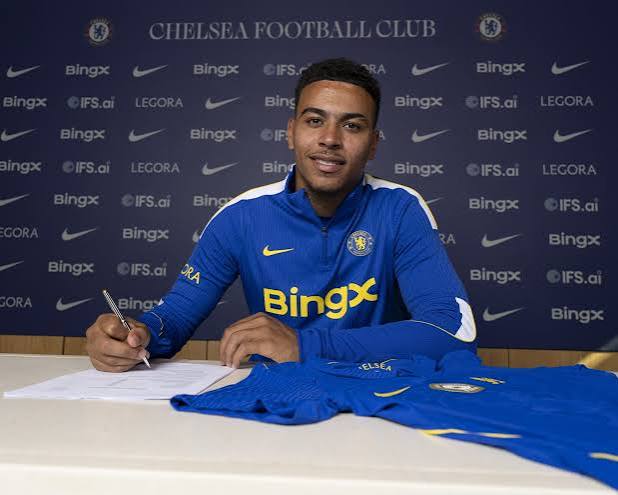
Morgan Rogers' move from Aston Villa to Chelsea tops the ranking with a 24.10% share of Chelsea's estimated revenue.
His reported fee is €138m, placing the transfer among the most expensive deals in football history.
Rogers has also made an encouraging start to life at Chelsea. After two league matches, the Blues had generated the second-highest expected-goals figure in the Premier League while also having the second-lowest possession share, an unusual combination that highlights how dangerous they have been in transition.
That makes the early signs encouraging for Chelsea.
However, two matches are hardly enough to justify €138m.
The real test will come when opponents adapt and Rogers has to maintain that influence across an entire season.
Sangare Shows Why the Ranking Is Different

Mamadou Sangare is arguably the biggest example of why this ranking is more interesting than a standard transfer-fee list.
Brentford paid €48m for the midfielder, which would not normally place him anywhere near the top of a conventional ranking dominated by nine-figure transfers.
But the fee represents 23.52% of Brentford's estimated revenue, putting him second.
Sangare is also already showing why Brentford were willing to make him their club-record signing.
His game is not built around one obvious speciality. He can carry the ball, create chances, win possession high up the pitch and contribute in several phases.
For Brentford, that versatility could be exactly what makes the investment worthwhile.
Brighton's Big Bet
Luka Vuskovic ranks third despite costing €54m.
The centre-back moved from Tottenham to Brighton, with the fee representing 20.86% of Brighton's estimated revenue.
It is particularly significant because the transfer is a club record for Brighton.
The 19-year-old also arrives with a potentially important advantage: his age gives Brighton considerable room for development.
Brighton have built much of their recruitment model around identifying players before their value reaches its peak. Spending this heavily on Vuskovic suggests the club believes he can become considerably more valuable in the future.
That is a very Brighton transfer.
Trafford and Delap Highlight the Risk
James Trafford's €46.7m transfer from Manchester City to Leeds ranks fourth, consuming 20.76% of Leeds' estimated revenue.
For a goalkeeper, that represents a significant commitment.
Liam Delap's move from Chelsea to Nottingham Forest ranks fifth at 20.56%.
Delap's transfer is particularly intriguing because Chelsea originally paid €35.5m to sign him from Ipswich before moving him on after a disappointing Premier League season.
His new fee is considerably higher.
That means Forest are betting heavily on a player who has yet to consistently reproduce his best form at Premier League level.
It is one of the clearest examples of how true cost can expose the risk hidden behind a conventional transfer fee.
Ipswich Are Everywhere
Ipswich Town have seven players in the top 50 — more than any other club.
That is remarkable for a newly promoted side.
Julio Enciso ranks seventh at €30.5m, while Emersonn is 10th at €28m.
Other Ipswich signings include Exequiel Palacios, Zian Flemming, Abdoul Ouattara and Florentino.
The strategy is clear: Ipswich have invested heavily across the squad rather than putting almost all their resources into one superstar signing.
The risk is obvious.
Newly promoted clubs have less financial room for error, so expensive recruitment must translate into Premier League survival.
But there is also a potential reward.
If Ipswich stay up and their young recruits develop, the club could emerge from the season with a much stronger squad and a dramatically improved financial position.
What the Ranking Tells Us
The most striking conclusion is that transfer fees cannot be viewed in isolation.
Manchester City can spend €145m on Enzo Fernández while that fee represents a smaller percentage of its revenue than several considerably cheaper deals do for other clubs.
For Brentford, €48m on Sangare is an enormous commitment.
For Ipswich, €30.5m on Enciso represents an even larger financial gamble.
That distinction matters even more under the Premier League's new Squad Cost Ratio rules, which place limits on how much clubs can commit to football-related costs relative to their revenue and net transfer profits.
It also explains why the Premier League's spending boom looks different depending on where you sit.
The biggest clubs can absorb extraordinary fees.
The smaller clubs have to make those fees count.
The Verdict
The 2026 summer transfer window was historic in terms of spending, with Premier League clubs collectively committing around £3.46 billion.
But the true-cost ranking provides a more revealing picture of the market.
Morgan Rogers is No. 1, not because his fee was the highest, but because it represents the largest share of his club's estimated revenue.
Mamadou Sangare's €48m move to Brentford ranks above Enzo Fernández's €145m transfer to Manchester City for exactly the same reason.
That is the fascinating part of this ranking.
Football's transfer market may be obsessed with enormous numbers, but context is the number that matters most.
Comments (0)
No comments yet. Be the first to share your thoughts!